Labor Shortages Are Crippling Wood Pallet Repair Operations
Why the pallet repair crisis is forcing warehouses to rethink their supply chain strategy
The wood pallet repair industry is facing an unprecedented labor crisis that's sending shockwaves through supply chains nationwide. For companies relying on CHEP and other pooled wood pallet programs, this shortage is creating operational nightmares that can no longer be ignored.
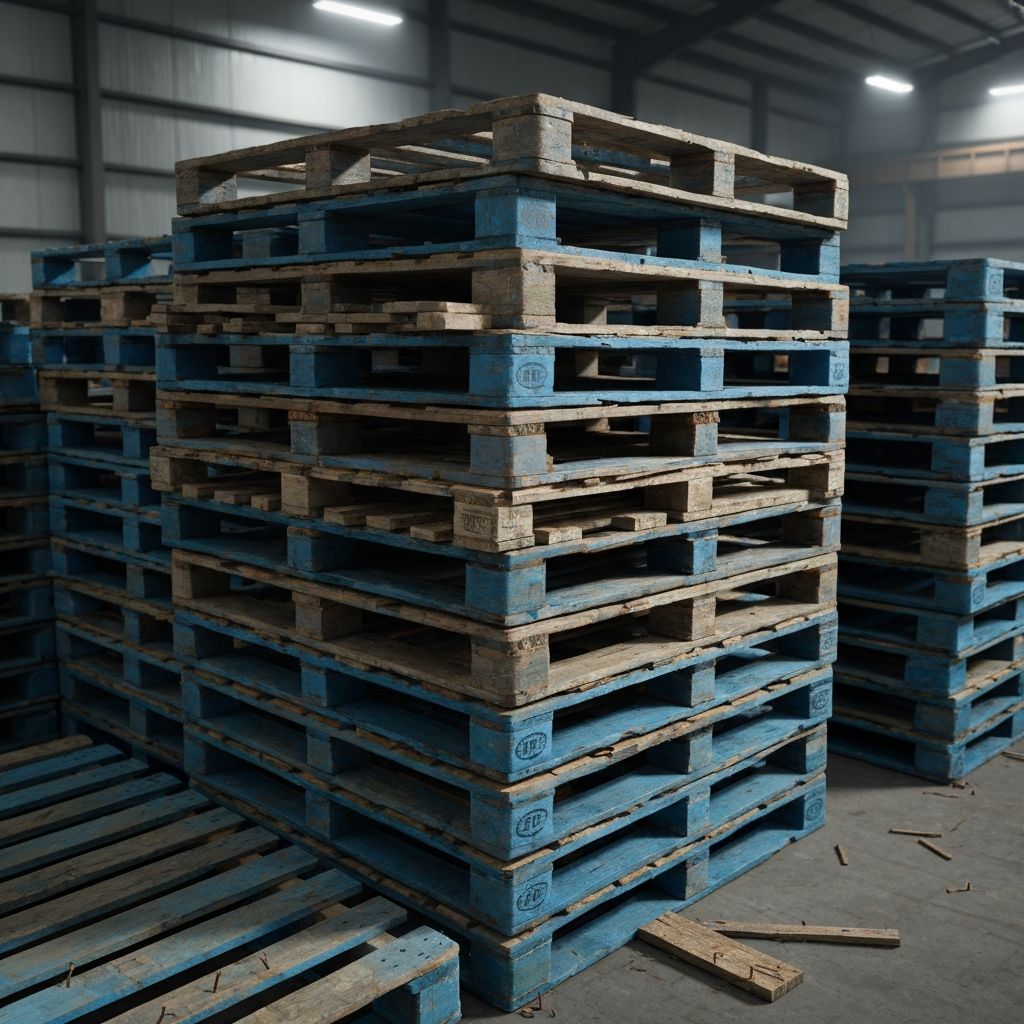
A stack of worn CHEP pallets showing typical damage: missing boards, splintered wood, and exposed nails
The Wood Pallet Repair Crisis
Pallet repair facilities across the country are experiencing workforce shortages of 30-40%, leading to massive backlogs and delayed turnaround times. For pooled pallet programs like CHEP, this means:
Staffing Shortages
Repair depots can't find enough workers to inspect, sort, and repair damaged pallets at the volume required.
Quality Decline
Rushed repairs and undertrained workers result in pallets that fail to meet automation tolerances.
The Hidden Problems with CHEP and GMA Pallets
Beyond labor shortages, there are fundamental issues with wood pallets that modern automated warehouses simply cannot tolerate:
US White Wood GMA Pallets: Not Built for Automation
Standard US-based white wood GMA pallets were designed decades ago for manual handling. Their dimensional inconsistency, moisture absorption, and tendency to warp make them poorly suited for today's automated storage and retrieval systems (ASRS) that require precise tolerances of +/- 2mm.
CHEP's Missing Board Problem
CHEP pallets frequently arrive with missing boards, protruding nails, and splintered wood. The labor shortage means these issues aren't being caught or repaired properly before pallets re-enter circulation.
Partial Block Guarantee Only
What many companies don't realize is that CHEP only guarantees partial blocks on their pallets—not full structural integrity. This means you could receive pallets that technically meet CHEP's standards but still fail in your automated systems.
The Game-Changer: Smart Pallets with OPEX Financing
Due to the critical need for high-quality pallets in automation, forward-thinking warehouses are upgrading to smart plastic or steel pallets. But here's what's making this transition even more attractive:
OPEX vs CAPEX: A Financial Revolution
Instead of large capital expenditures, companies can now pay for premium plastic and steel pallets on a monthly basis. This operational expense model means:
Why Smart Pallets Win in Automation
- Precise +/- 2mm dimensional tolerance for ASRS compatibility
- 99.5% weight consistency eliminates conveyor rejects
- No missing boards, nails, or splinters—ever
- 10+ year service life with zero repair dependency
- IoT sensor integration for real-time supply chain visibility